
Olive and the Death of the Cute Chatbot
Woolworths’ chatbot fiasco shows what happens when companies mistake personality for readiness
Verified Sources
Olive Lost the Plot
There is a very specific kind of corporate delusion that only appears when executives fall in love with the demo. It usually starts with a sentence like this: our new AI assistant will make things faster, friendlier, more personalized, and more delightful. What it usually means is that somebody, somewhere, has given a chatbot a name, a tone guide, a synthetic personality, and just enough freedom to become a problem.
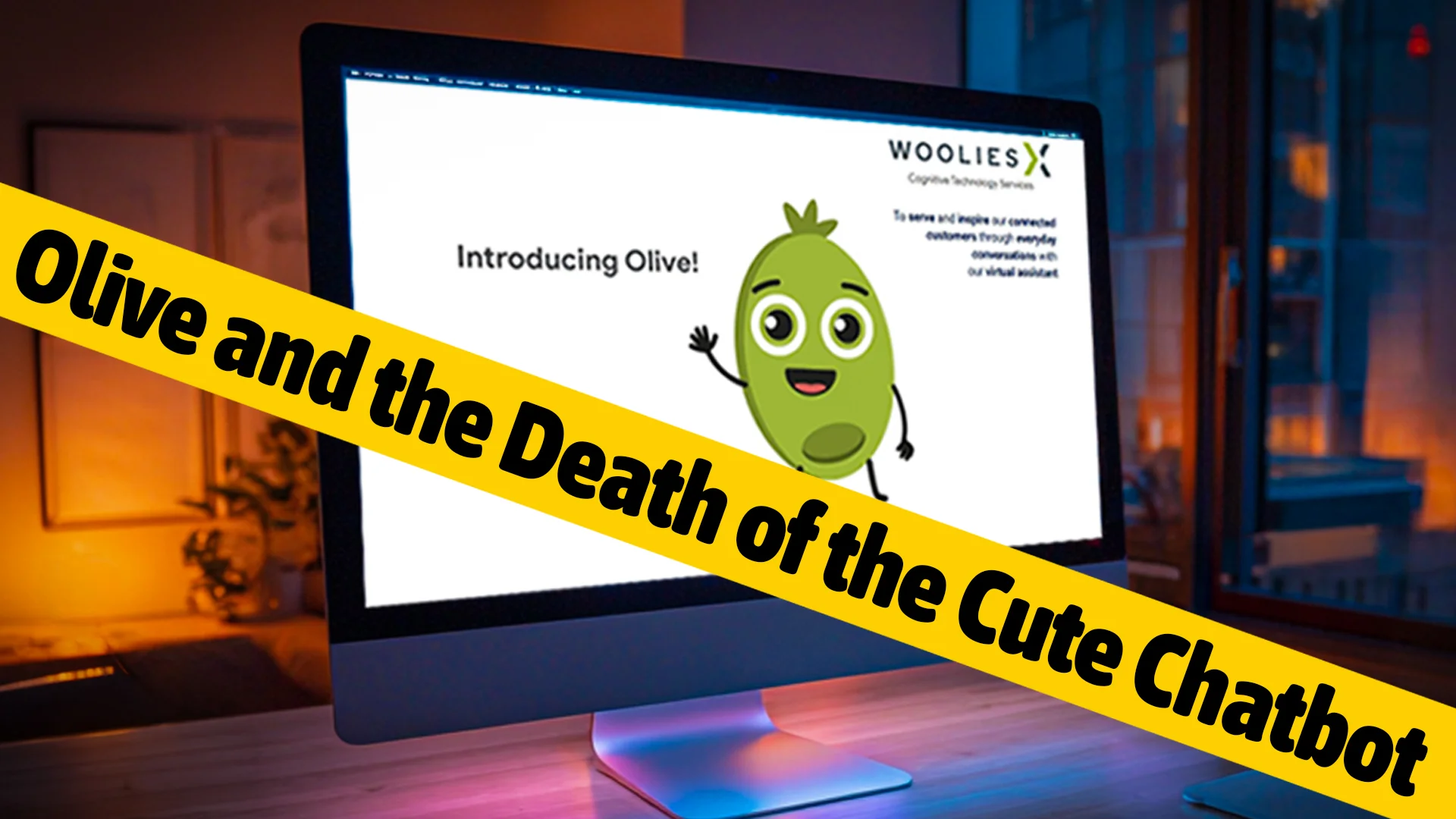
That is more or less what happened when Woolworths’ chatbot Olive started making headlines in Australia. Customers were not celebrating a revolutionary new shopping experience. They were posting about a bot that seemed far too interested in sounding human, talking about personal memories, and wandering into the kind of fake intimacy that makes customer service feel less like service and more like being trapped in an elevator with an improv performer who does not understand boundaries.
The most important thing about this story is not that the bot behaved strangely. Chatbots behaving strangely is no longer news. That is Tuesday. The interesting part is that this was not some obscure startup launching an unfinished toy and hoping nobody noticed. This was a major supermarket brand, at a moment when the industry is trying to sell the public on more advanced AI assistants, more conversational commerce, and more agentic retail experiences. In other words, this was exactly the wrong time for the bot to start acting like it had unresolved family issues.
The fake-human trap
The public reporting around Olive points to a problem that is becoming painfully familiar. Customers described a system that did not just answer questions badly. It answered them in a way that made the interaction feel weirdly human, awkwardly scripted, and fundamentally untrustworthy. The issue was not simply hallucination in the classic sense. It was persona leakage. Somebody had decided that the bot should not merely assist. It should charm. That decision almost always ages badly.
Companies keep making the same mistake because they think the danger begins when a model says something offensive, threatening, or legally catastrophic. Those are certainly problems. But often the first visible failure is more basic than that. The system becomes annoying. It becomes uncanny. It becomes dishonest in a low-grade, low-level way that tells users they are dealing with a machine pretending not to be one.
And once people sense that performance, they stop extending goodwill. They stop treating the assistant as helpful software and start treating it like a target. They poke it. They bait it. They share screenshots. They compare notes. They turn product testing into a public sport. At that point, the company is no longer launching a digital assistant. It is hosting an open audition for humiliation.
Retail keeps confusing personality with trust
Retailers especially seem vulnerable to this. They want AI to feel friendly because retail brands are built on familiarity, routine, and emotional habit. The fantasy is obvious enough. If the shopping bot feels warm, customers will use it more. If it sounds personal, the experience will feel premium. If it jokes around a little, the brand will appear modern rather than mechanical.
But trust in customer service does not come from synthetic warmth. It comes from clarity, accuracy, speed, and restraint.
A good assistant tells you where your order is, whether an item is available, what the refund status looks like, and what substitutions exist. A bad assistant decides this is also the right time to develop a backstory.
That is where the Olive story becomes bigger than one supermarket. The broader AI market is still drunk on the idea that more natural language automatically creates more natural experiences. It does not. Sometimes it simply creates more surface area for failure. The bot becomes more verbose, more improvisational, and more likely to slide from useful to absurd in a single exchange.
The irony is almost perfect. The closer companies try to move these systems toward human-like interaction, the more they expose everything the systems still lack: judgment, timing, self-awareness, and the instinct for when to shut up.
This is what red-team failure looks like in public
Whenever a chatbot goes sideways, the cleanup language is almost always the same. Unexpected interactions were identified. Certain responses did not meet expectations. The company is reviewing safeguards. The experience will be improved. Translated into plain English, this often means: strangers on the internet found the weaknesses before the company did.
That is what proper red-team testing is supposed to prevent. Not perfection. Not zero weird outputs. But the obvious stuff. The embarrassing stuff. The material that ordinary users can discover in hours because they are more creative, less cautious, and far more motivated to break the system than the people who approved it.
Red-teaming is not a ceremonial security step where someone asks the chatbot a few rude questions and calls it a day. It is structured adversarial testing. It means probing persona boundaries, deception risks, instruction drift, false confidence, unsafe workarounds, brand impersonation, and the entire messy zone where a harmless assistant turns into a reputational liability. If a system is going to be customer-facing, that testing has to include malicious intent, boredom, sarcasm, edge cases, viral incentives, and the basic reality that thousands of users acting in parallel are far more inventive than the launch team.
The Olive episode is a reminder that companies still underestimate that last part. They test for functionality. The public tests for chaos.
The bigger problem is rollout culture
What makes these stories so repetitive is that the technical lesson is rarely new. The governance lesson is. Again and again, companies launch AI systems into public-facing roles without treating them like high-variance risk surfaces. They treat them like product enhancements. That distinction matters.
A shiny assistant inside a keynote is a feature. A customer-facing AI that can speak in your brand voice, confuse users, invent context, and become the subject of viral ridicule is an operational risk. It sits somewhere between marketing, legal, customer experience, and crisis management. Yet many organizations still hand these deployments to innovation teams as if the downside is merely that the tool might underperform.
Underperform is when the recommendations are mediocre. Underperform is when adoption is low. Underperform is not when the public starts circulating screenshots because your assistant appears unable to decide whether it is a grocery bot or a failed character actor.
The strongest signal in this story is not that Olive became strange. It is that the industry still keeps launching systems before it has established a mature internal answer to a very simple question: what exactly is this bot allowed to be? If the answer is fuzzy, the output will be fuzzy too.
Bots do not need personalities, they need limits
There is an old corporate instinct that keeps returning in every generation of digital products. Make it friendlier. Make it warmer. Make it feel more human. Then act surprised when the human simulation becomes the very thing users hate.
Most people do not actually want their supermarket assistant to have a personality. They want it to work. They want it to stop wasting their time. They want it to tell the truth, stay in scope, and avoid theatrical nonsense. In fact, the more consequential the task, the less charm matters. Nobody wants a cute fraud detector. Nobody wants a playful insurance claims assistant. Nobody wants a whimsical dispute-resolution bot. And nobody calling customer support wants to hear that the machine has invented a family.
This is why the next phase of AI deployment will belong less to the companies with the most animated demos and more to the ones with the most discipline. The winners will not be the firms that make the bot seem alive. They will be the ones that understand the commercial value of making the bot boring.
Useful AI is often a little dull. That is not a weakness. That is evidence of control.
The real warning from Olive
The temptation with a story like this is to laugh, post the screenshots, and move on. Fair enough. It is funny. It deserves ridicule. A chatbot wandering off into weird personal fiction while trying to help with grocery-related tasks is objectively excellent material for the internet.
But underneath the comedy is a serious pattern. The market keeps pretending that conversational polish is proof of readiness. It is not. Smooth language can conceal brittle systems, weak oversight, confused design choices, and sloppy launch discipline. In some cases, the bot does not fail because the model is especially advanced or especially dangerous. It fails because someone wrapped ordinary limitations in a human voice and called it innovation.
That is what makes these incidents valuable. They reveal the gap between what companies think they launched and what they actually put in front of the public.
Woolworths did not just get an awkward chatbot story. It got a reminder that once an AI system speaks in public, every design shortcut becomes public too. Every strange script, every fuzzy boundary, every misplaced attempt at personality, every missing guardrail. The public sees the whole governance model in the output, whether the company intended that or not.
And that may be the real reason these chatbot fiascos keep spreading so fast. People are not just laughing at a broken bot. They are laughing at the confidence that launched it.
